Verify
Verify is a compliance management platform designed to help organisations track and manage how employees meet regulatory and internal requirements.
The challenge was to make a complex, often fragmented process feel clear and manageable for two very different user groups: individual employees and team leaders. Both needed access to the same underlying data, but in ways that supported very different goals and behaviours.
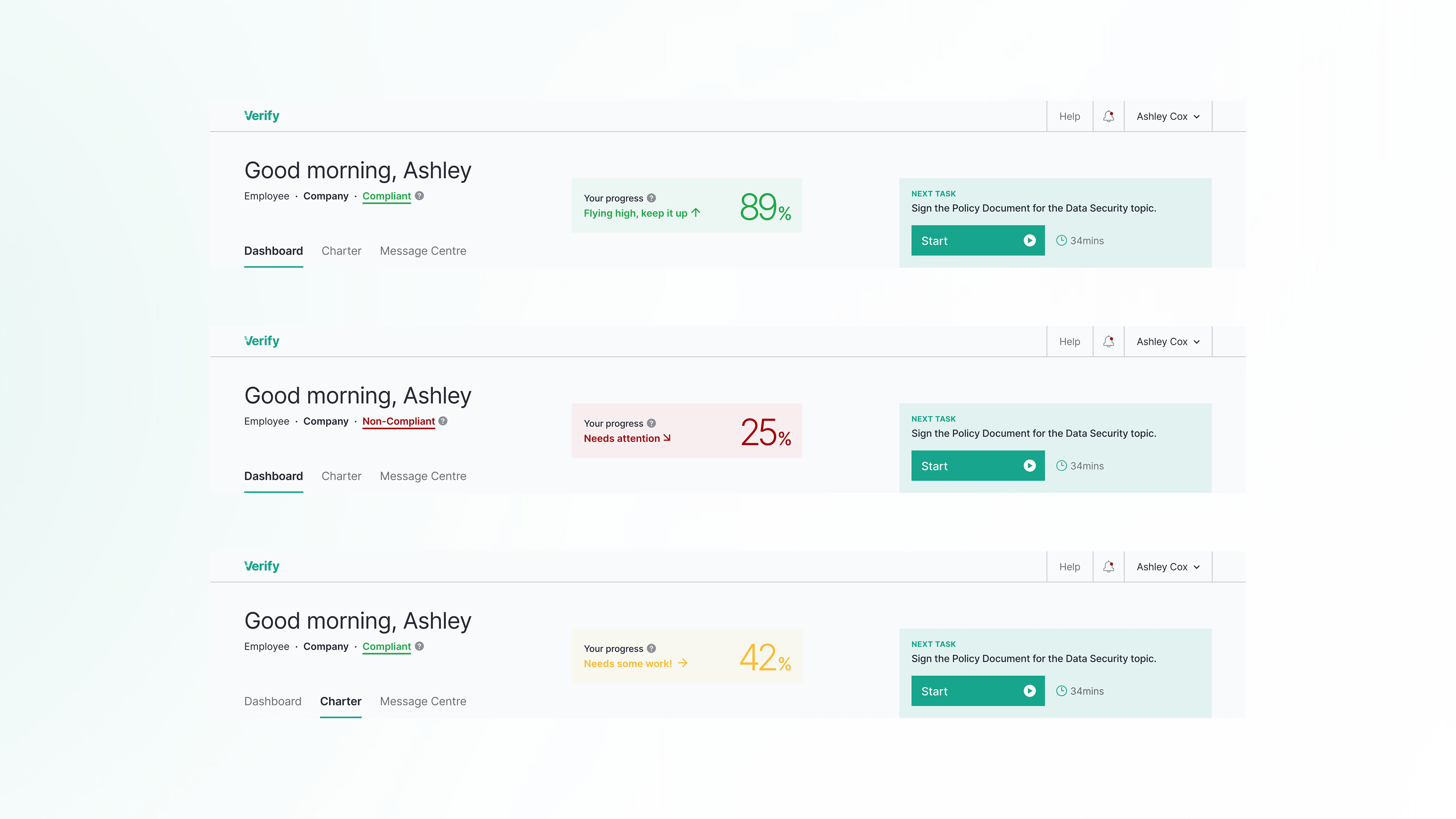
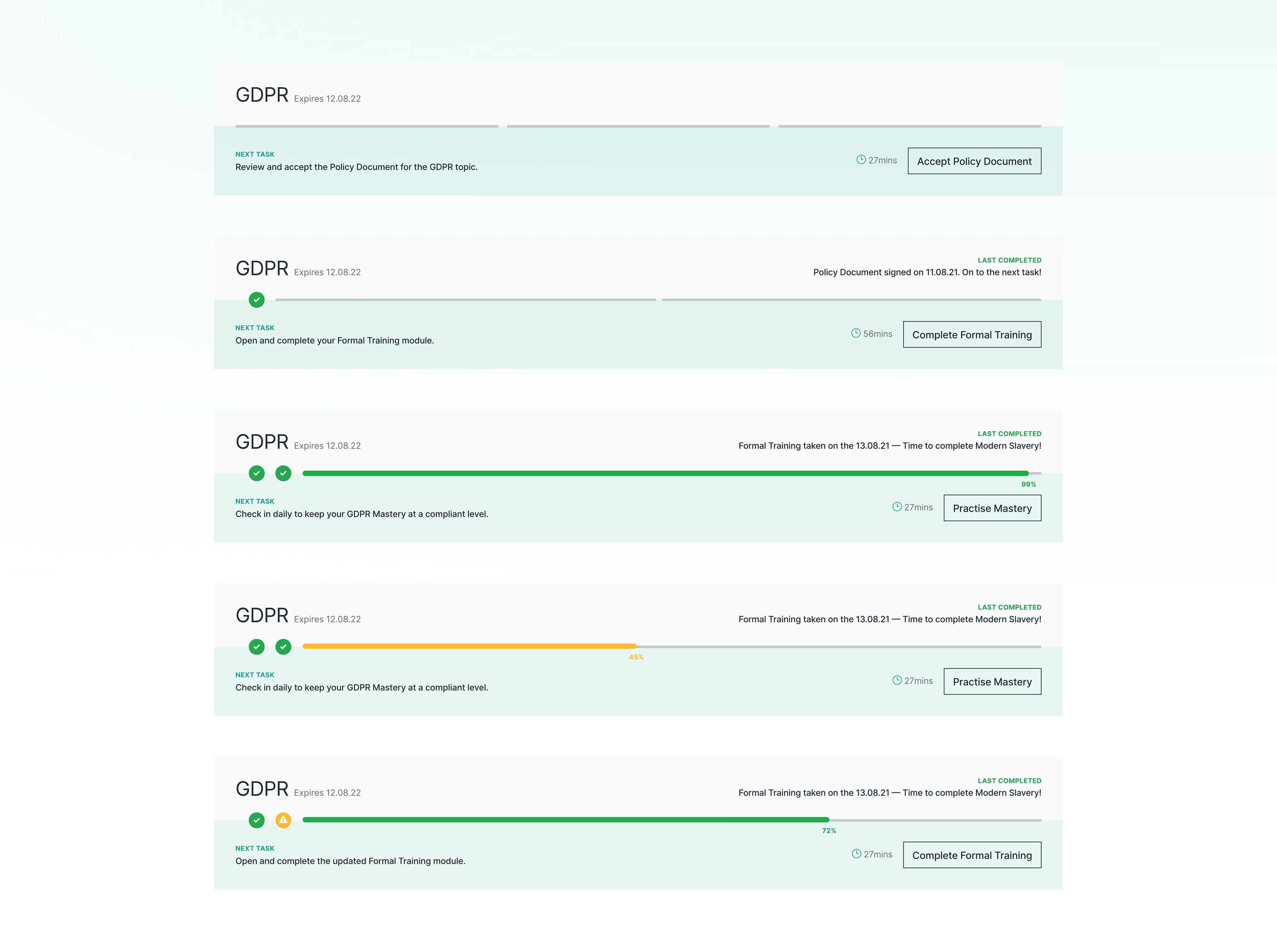
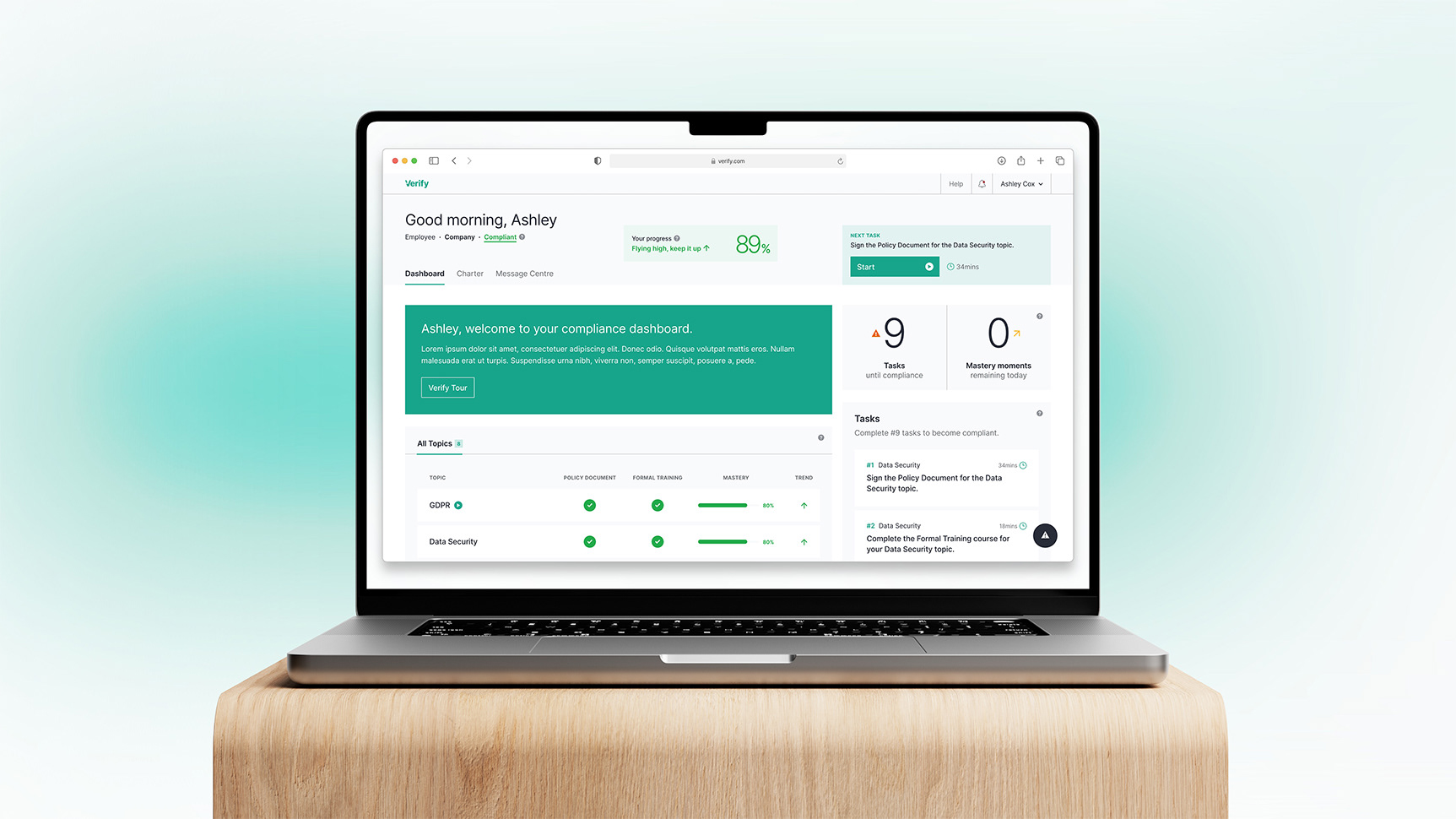
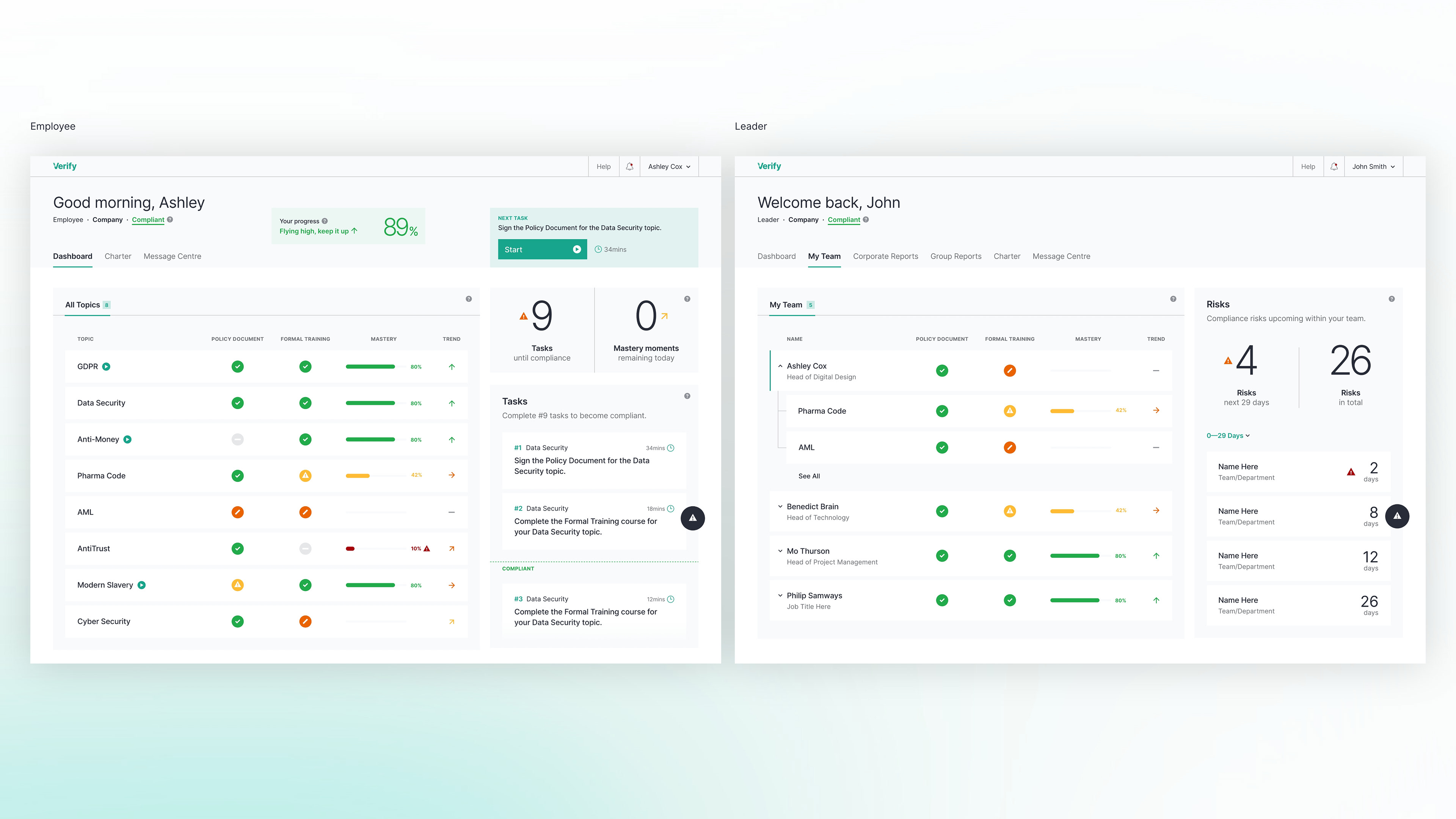
For employees, the focus was on clarity and ownership. I worked on shaping a dashboard that surfaces what matters most at a glance, including current status, upcoming deadlines, and required actions. The aim was to reduce uncertainty and make it easy for users to understand what they need to do, without needing to navigate multiple systems or documents.
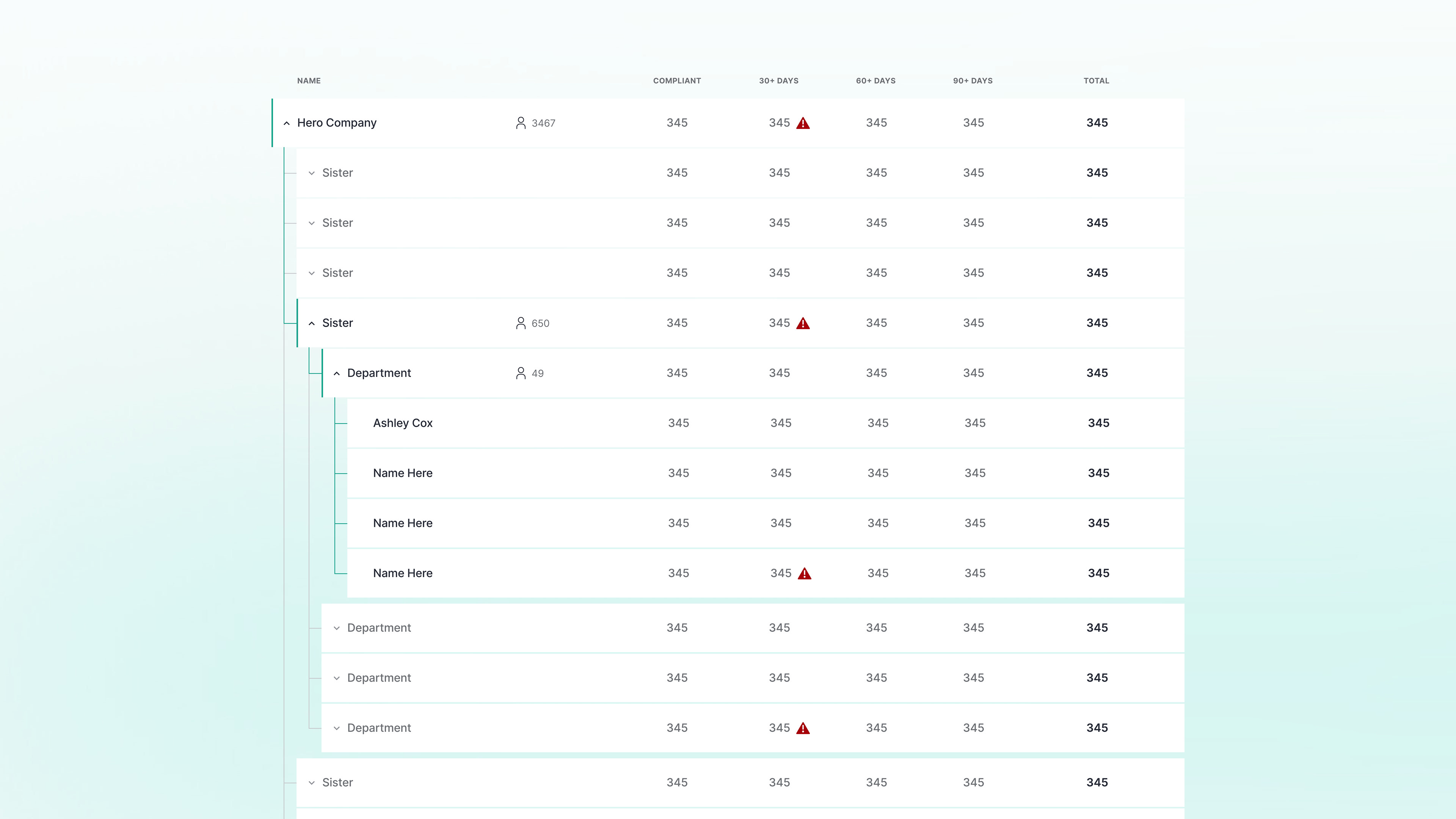
For team leaders, the need was visibility at a broader level. The platform provides an overview of team compliance, allowing managers to quickly identify gaps, track progress, and prioritise action. Complex data is structured into clear, scannable views to support faster decision making and reduce time spent interpreting reports.
A key part of the work was designing a system that could support both individual task management and higher level oversight, without duplicating functionality or adding unnecessary complexity. This meant focusing on hierarchy, information structure, and consistent patterns across the product.
The result is a platform that simplifies compliance for employees while giving managers clearer visibility and control, helping reduce risk and improve overall engagement with the process.
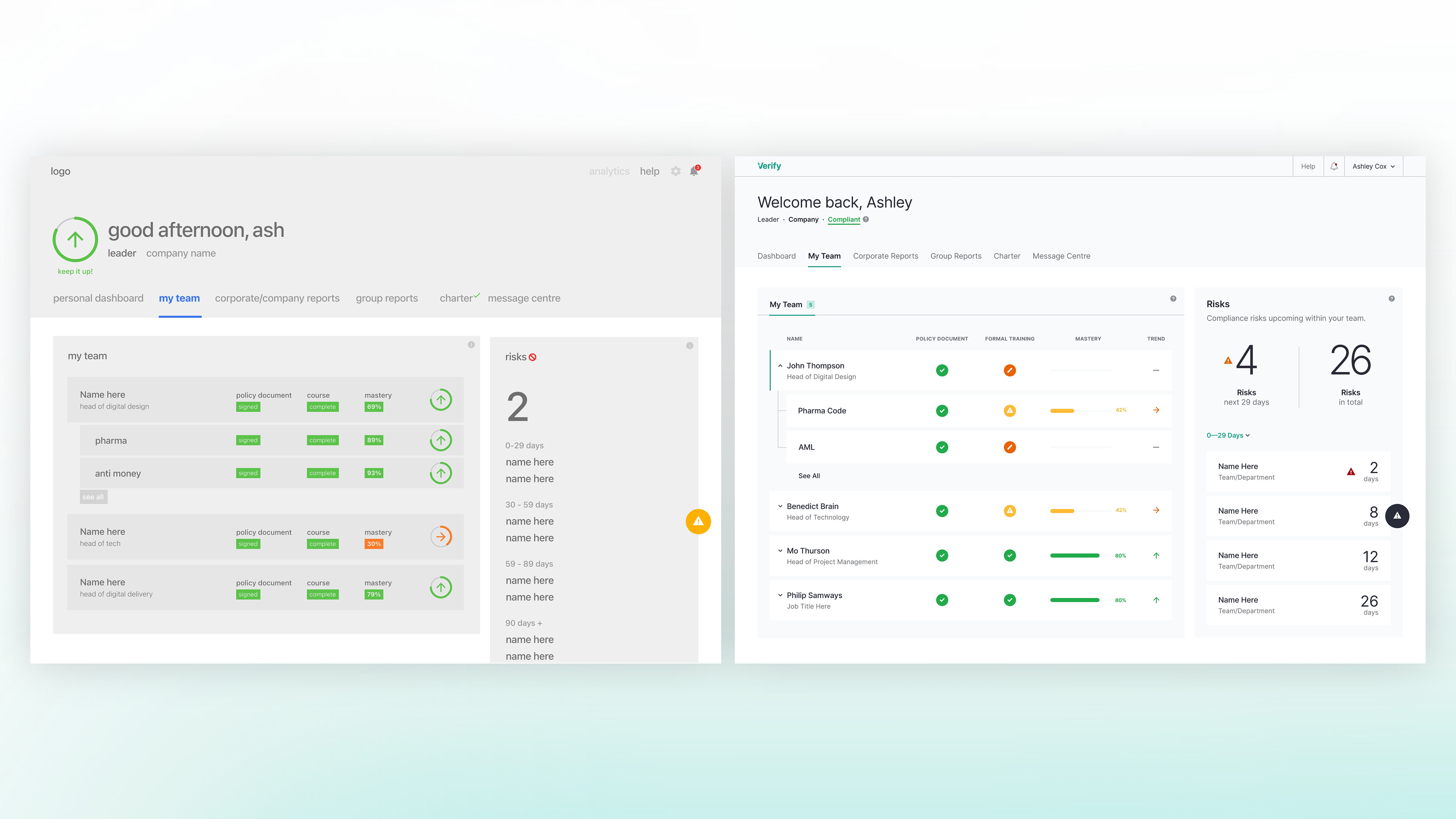
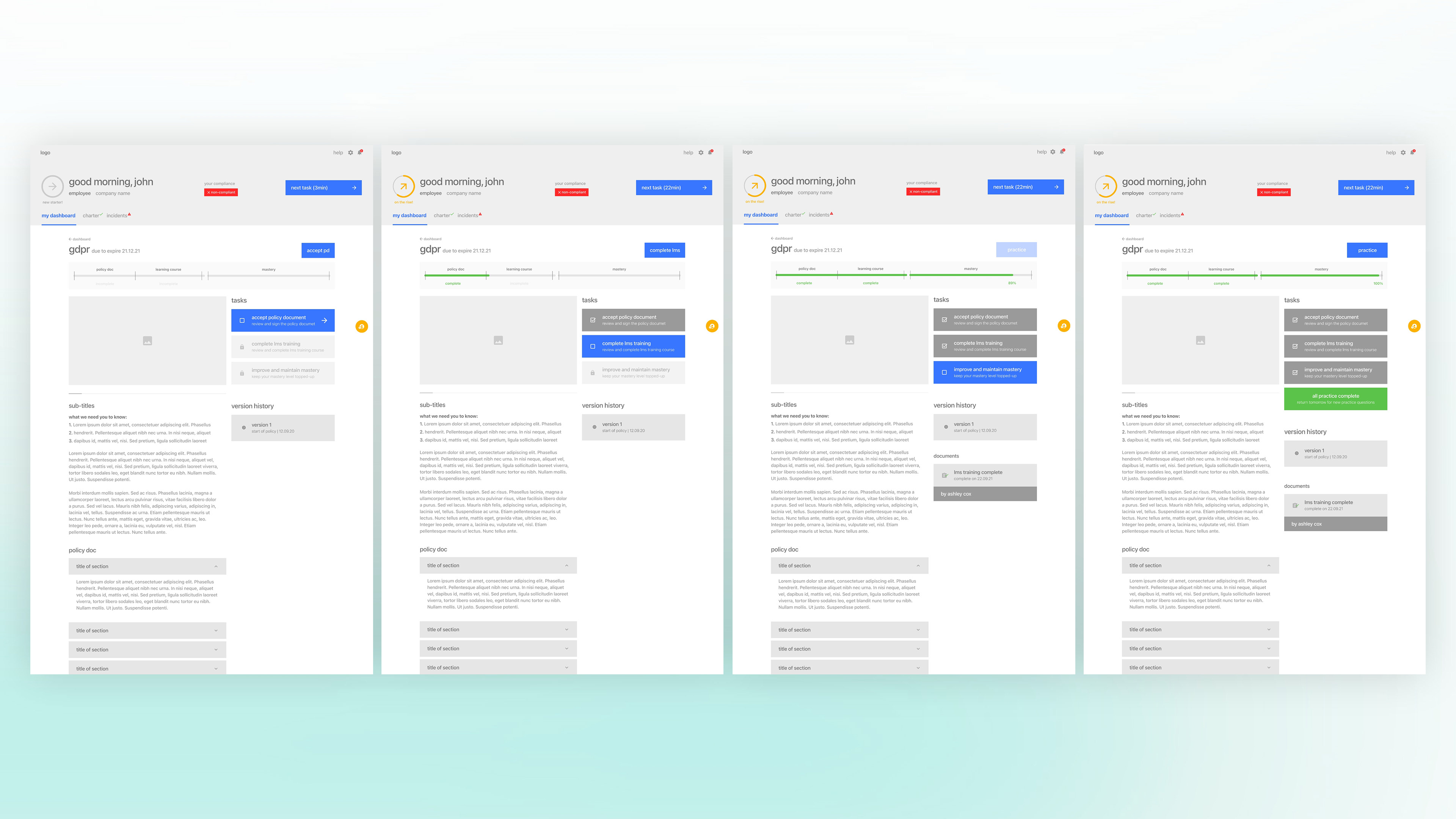
The development of Verify began with a comprehensive wire-framing process, allowing me to create a detailed blueprint of the platform's structure and functionality. This step enabled us to thoroughly test and refine the user experience before moving into the visual design phase. We engaged our colleagues, who represented our target audience, in a series of user testing sessions. Participants were given a diverse range of tasks to complete within the wireframe prototype, simulating real-world usage scenarios. This approach provided invaluable insights into the platform's navigation, information architecture, and overall usability.
We analysed the feedback, identifying and addressing any pain points or areas of confusion. By iterating on the wireframes based on these findings, we ensured that the final design would be intuitive, efficient, and aligned with user expectations. This user-centred design process laid a solid foundation for Verify, resulting in a platform that not only meets technical requirements but also delivers an exceptional user experience.
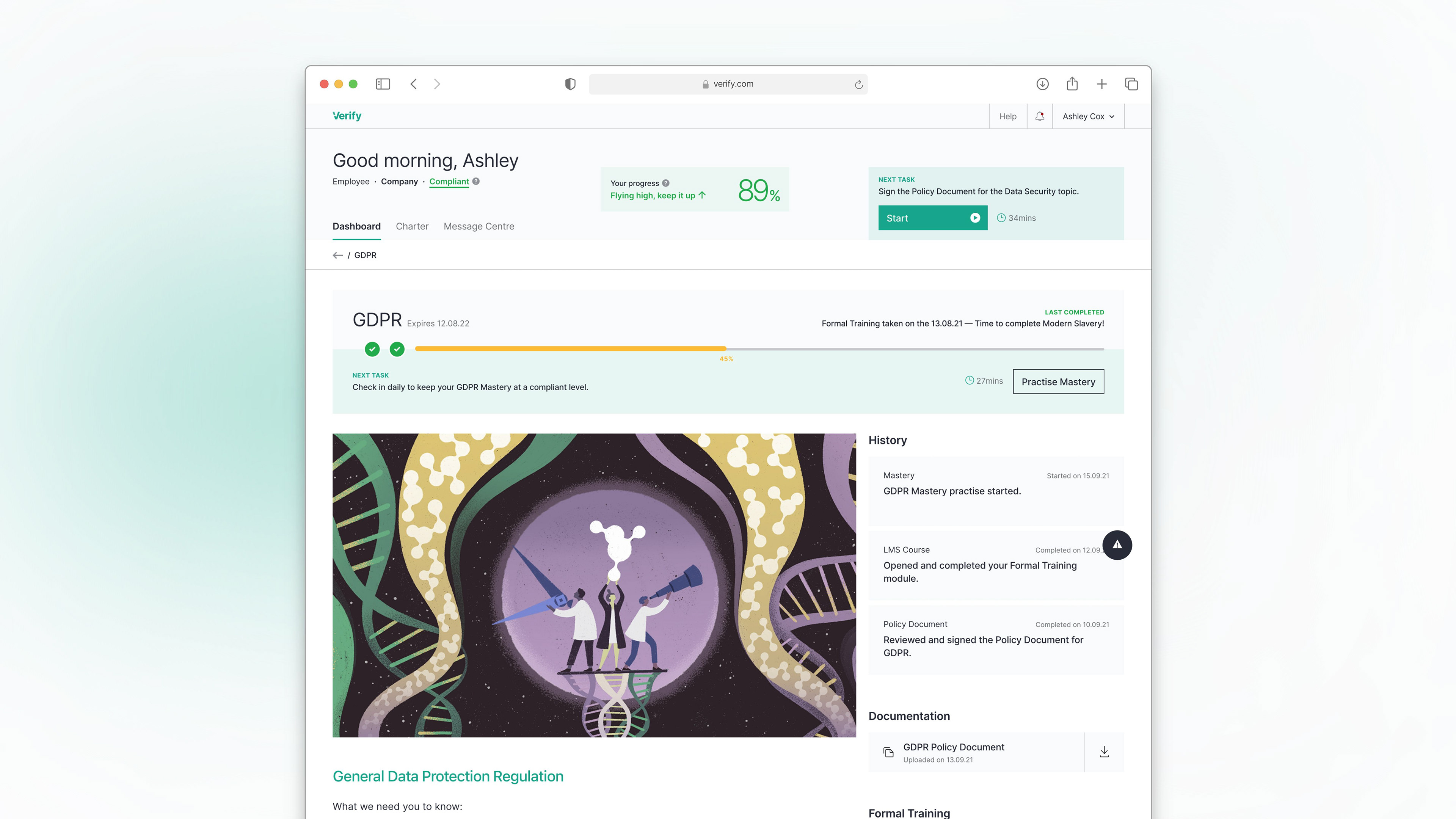
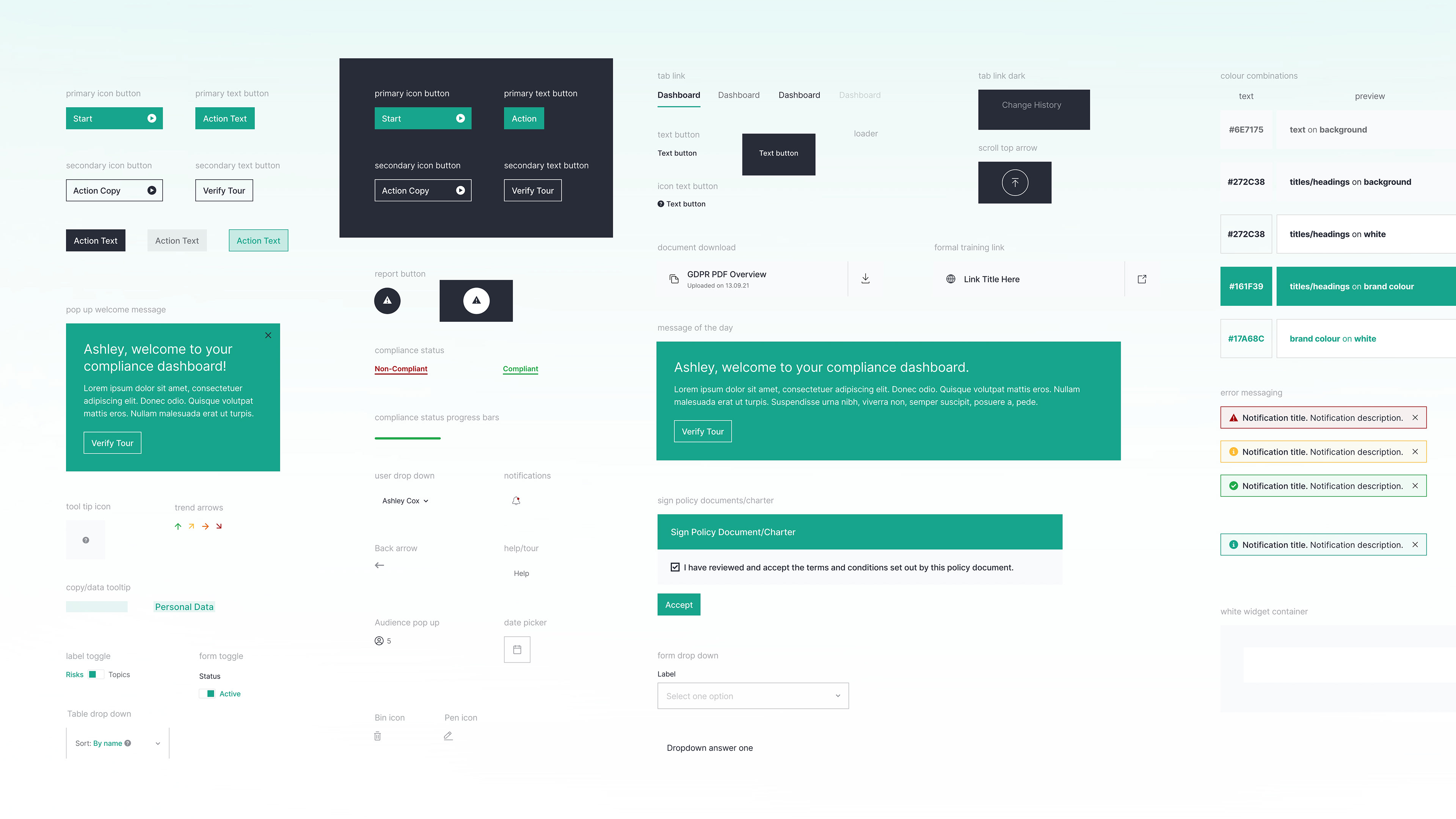
Verify's user interface was crafted using an 8pt grid and the principles of atomic design, a methodology that ensures scalability, consistency, and efficiency in the design process. This approach breaks down the interface into five distinct levels: atoms, molecules, organisms, templates, and pages.
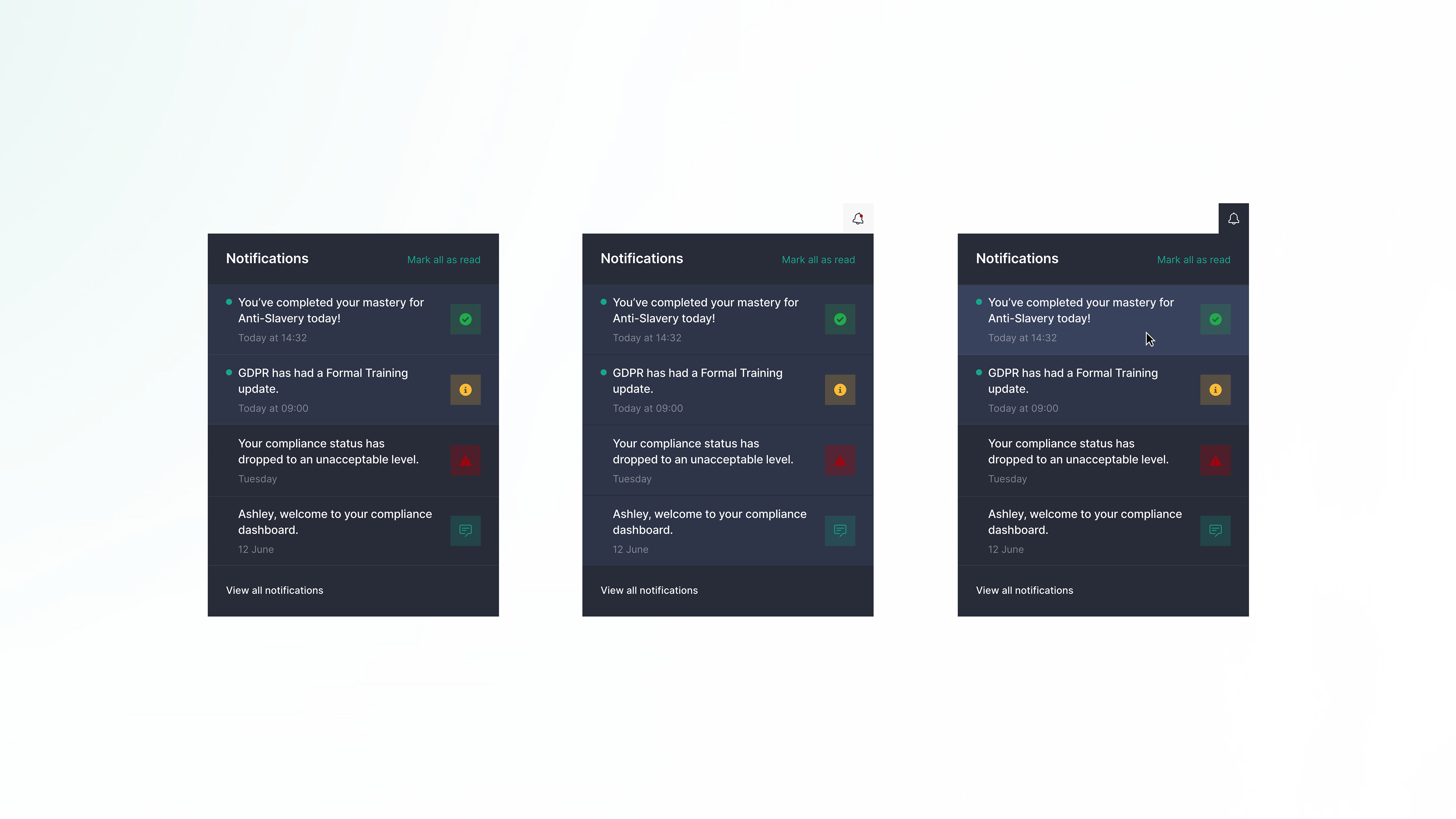
Throughout the design process, each component was carefully created with multiple states and variations, ensuring a comprehensive and flexible design system. This detail allowed for seamless interactions and smooth state transitions within the platform. As the project scaled and the complexity of Verify grew, this atomic design approach proved invaluable. It enabled us to make efficient updates and iterations to individual components, which then propagated throughout the entire system. The use of this advanced UI system ultimately contributed to Verify's polished, consistent user experience and its ability to adapt to future requirements with minimal disruption.
Worked on as part of the Inizio Engage XD team.